

The Second Step to Real Leadership: Internal Locus of Control

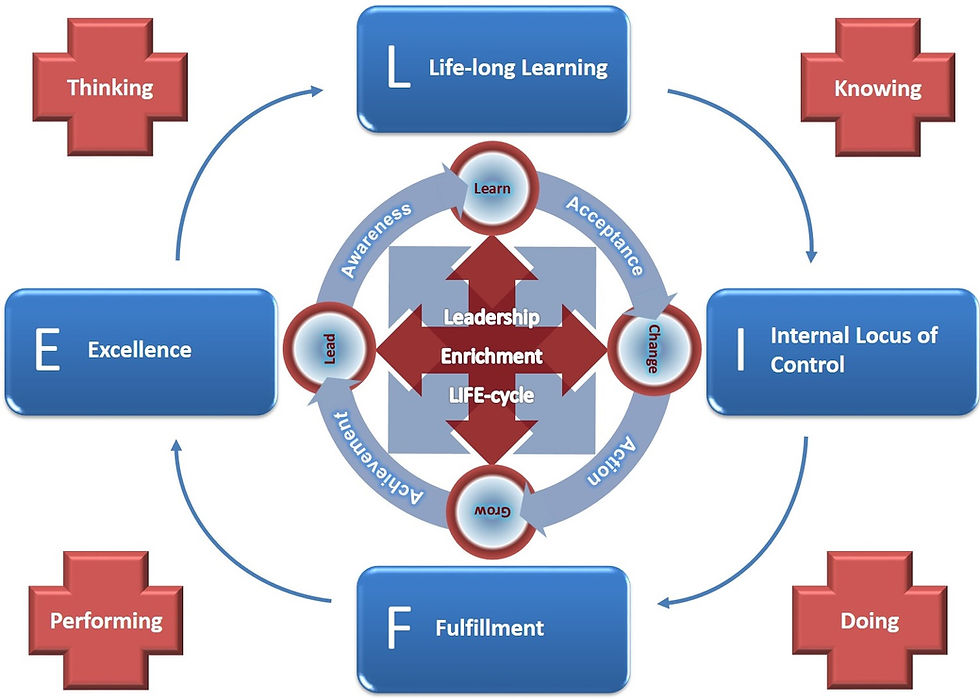
You’ve elevated your awareness and committed to learning. Now comes the hard part: taking ownership. The second stage of the Leadership Enrichment LIFE-cycle (LEL-c) is
INTERNAL LOCUS OF CONTROL. This is where the "knowing-doing gap" is bridged.
"Locus of control" refers to your belief about what causes the results in your life.
An external locus of control attributes outcomes to powerful others, fate, or chance. It’s a mindset where individual efforts don't seem to matter much.
An internal locus of control, however, is the belief that events result primarily from your own behavior and actions. It’s the conviction that your efforts count.
Real leaders operate from a high internal locus of control. They believe they can influence outcomes and are more likely to assume their efforts will be successful.
The Emotional Connector: ACCEPTANCE
To develop an internal locus of control, you must first pass through the emotional connector of ACCEPTANCE. This means fully acknowledging what you learned about your leadership in the first stage, without excuses. Acceptance isn’t about resignation; it’s about unlocking the energy for change. It requires releasing limiting emotions like fear, anger, and pride, and embracing unlimiting ones like courage. As the book notes, the key question is not "Am I a good or bad person?" but rather "What is preventing me from being more effective, and what can I do to improve?".
The Performance Waypoint: CHANGE
Acceptance prepares you for the worthwhile CHANGE that comes next. This isn't about random action; it's about planned, intentional change.
Take Your Lead offers a simple but effective formula for building a compelling case for change: you must demonstrate that the combination of your Level of Dissatisfaction, Clear Vision of Potential, Practical First Steps, and Belief that Change is Possible is greater than the perceived Cost of Change.

This stage is where you move from designing your Leadership Platform to actively building and modifying it. It's about taking what you've learned and accepted, and using it to construct a stronger foundation for your leadership.
In our next post, we’ll explore Stage 3: Fulfillment, where planned changes are put into motion to achieve real growth.


Comments